Remlori › Korean › Korean vocabulary mnemonics: connect sounds to pictures
Korean vocabulary mnemonics: connect sounds to pictures
A mnemonic gives an unfamiliar sound a connection to a meaning. Remlori uses recurring picture cues for sound units, then combines them into a scene for each Korean word.
Work through 나무 (namu, tree)
First play the recording. Open its picture below and follow 나 (na), then 무 (mu), through the scene. The sound cues lead to the tree. Close the story and recall “tree” from 나무 alone.
나무 · tree
namu
Picture and sound mnemonic
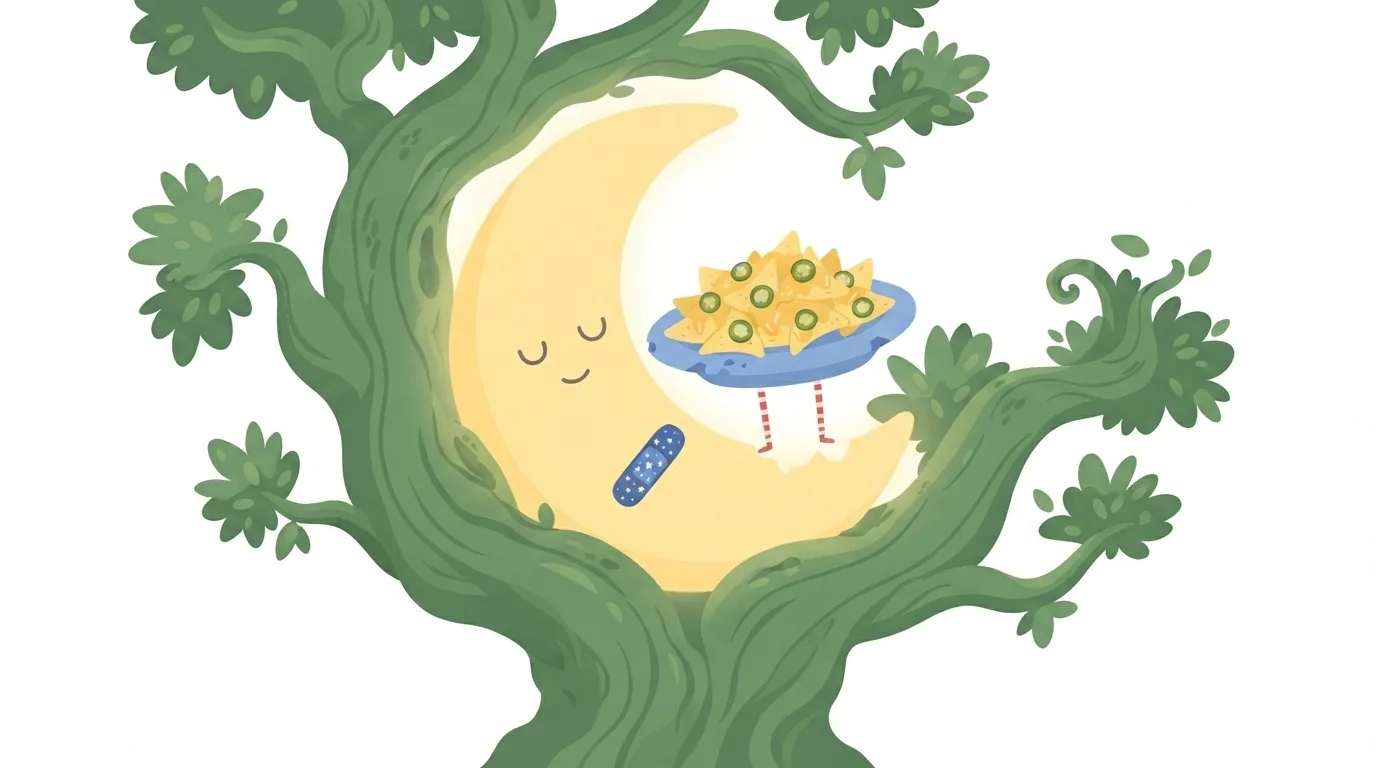
나 (na) → Nachos + 무 (mu) → Moon
고기 · meat
gogi
Picture and sound mnemonic
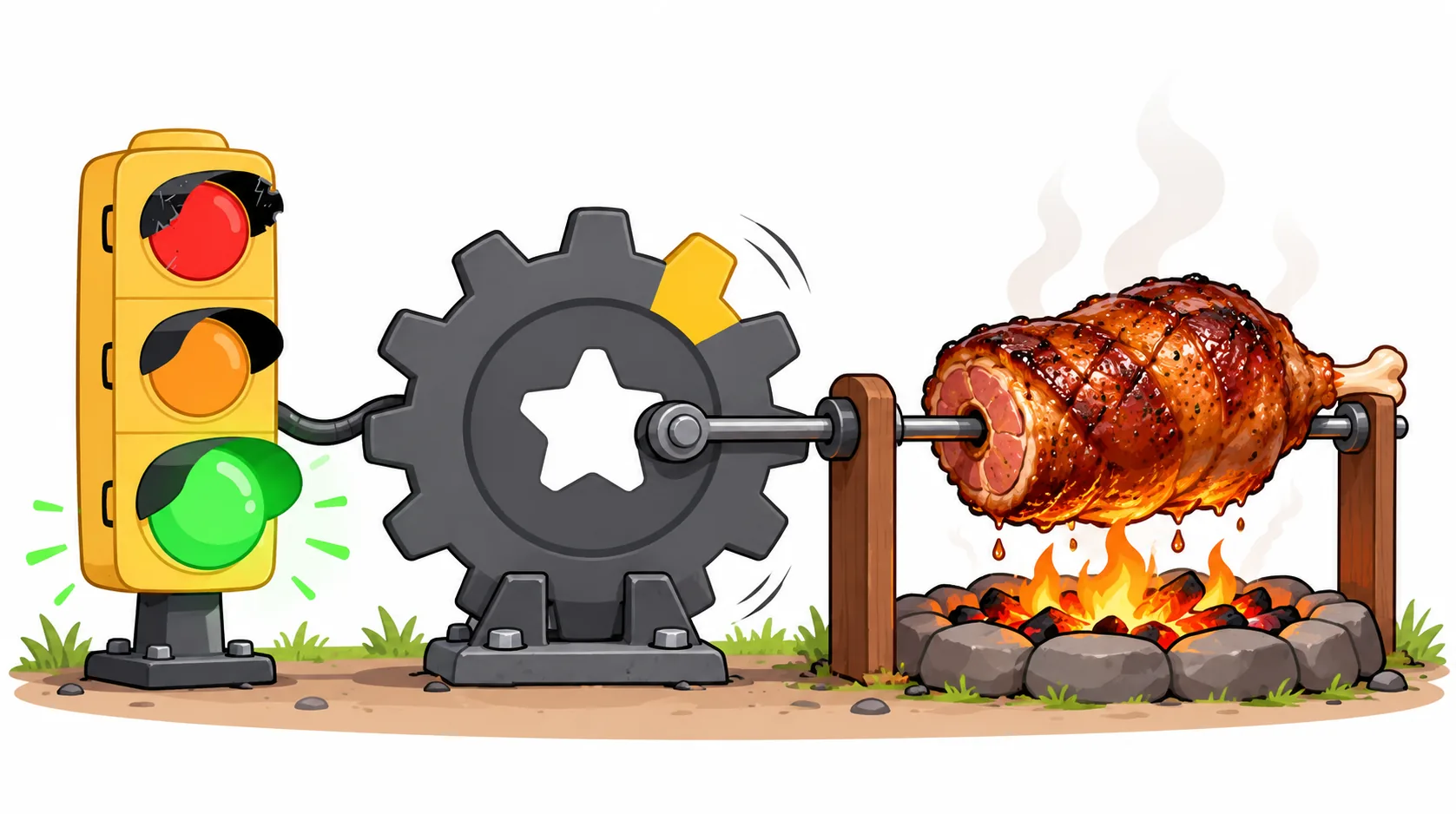
고 (go) → Go + 기 (gi) → Gear
고양이 · cat
goyangi
Picture and sound mnemonic
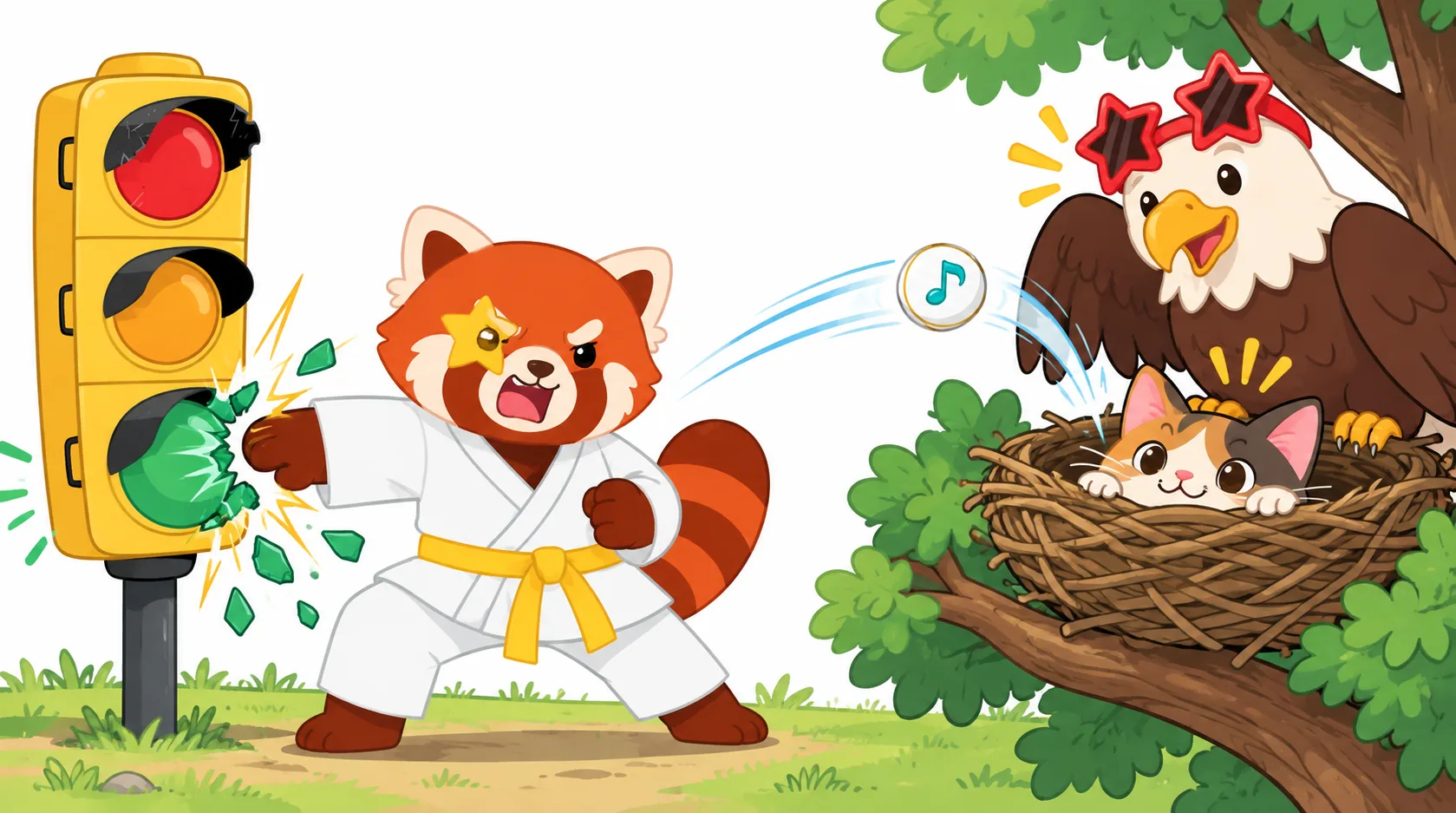
고 (go) → Go + 야 (ya) → Yah + ㅇ (ng) → Ping + 이 (i) → Eagle
Keep the hook separate from the pronunciation
English cue words approximate a Korean sound. They cannot teach every vowel distinction, tense consonant or connected-speech change. Keep the word's Hangul spelling and recording beside the picture. For example, 고양이 has three blocks, 고 / 양 / 이; a picture does not replace reading them.
Use recall after the picture
- Listen and read the word.
- Follow the sound pictures to the meaning.
- Cover the story and try recalling the meaning.
- Come back later and test it again. Reopen the picture for words you miss.
Try the three words
Choose a mode and a group. Each round has up to ten questions. Wrong answers go into a retry round.
Try these questions, then open the answers. The interactive version needs JavaScript.
- What does 나무 mean?
Answer and explanation
tree — 나무 (namu) — tree. A plate of NACHOS on thin legs sits on a sleepy MOON wedged in the branches of a sprawling TREE.
- What does 고기 mean?
Answer and explanation
meat — 고기 (gogi) — meat. A traffic light flashes GO, and a giant GEAR starts turning a spit of sizzling MEAT.
- What does 고양이 mean?
Answer and explanation
cat — 고양이 (goyangi) — cat. A traffic light flashes GO; a red panda in a karate gi chops it with a loud YAH, sending a little ping-pong ball off with a bright PING into an EAGLE's nest, where a CAT is hiding.
For reading first, try Hangul reading practice. For more examples, use the animal mnemonics.
Written by Remlori using examples and media from our beginner course. Alphabet reference: National Institute of Korean Language, Hangul principles. Romanization approximates the sound; use the recordings when practising.
Learn your first sounds, words and sentences. Lesson 1 needs no account.
Start Korean Lesson 1